Showing posts with label backyard wildlife. Show all posts

Saturday, October 8, 2016

The Problem With Panther

Another cat post. Boy, this lady must really dig her cats, huh?

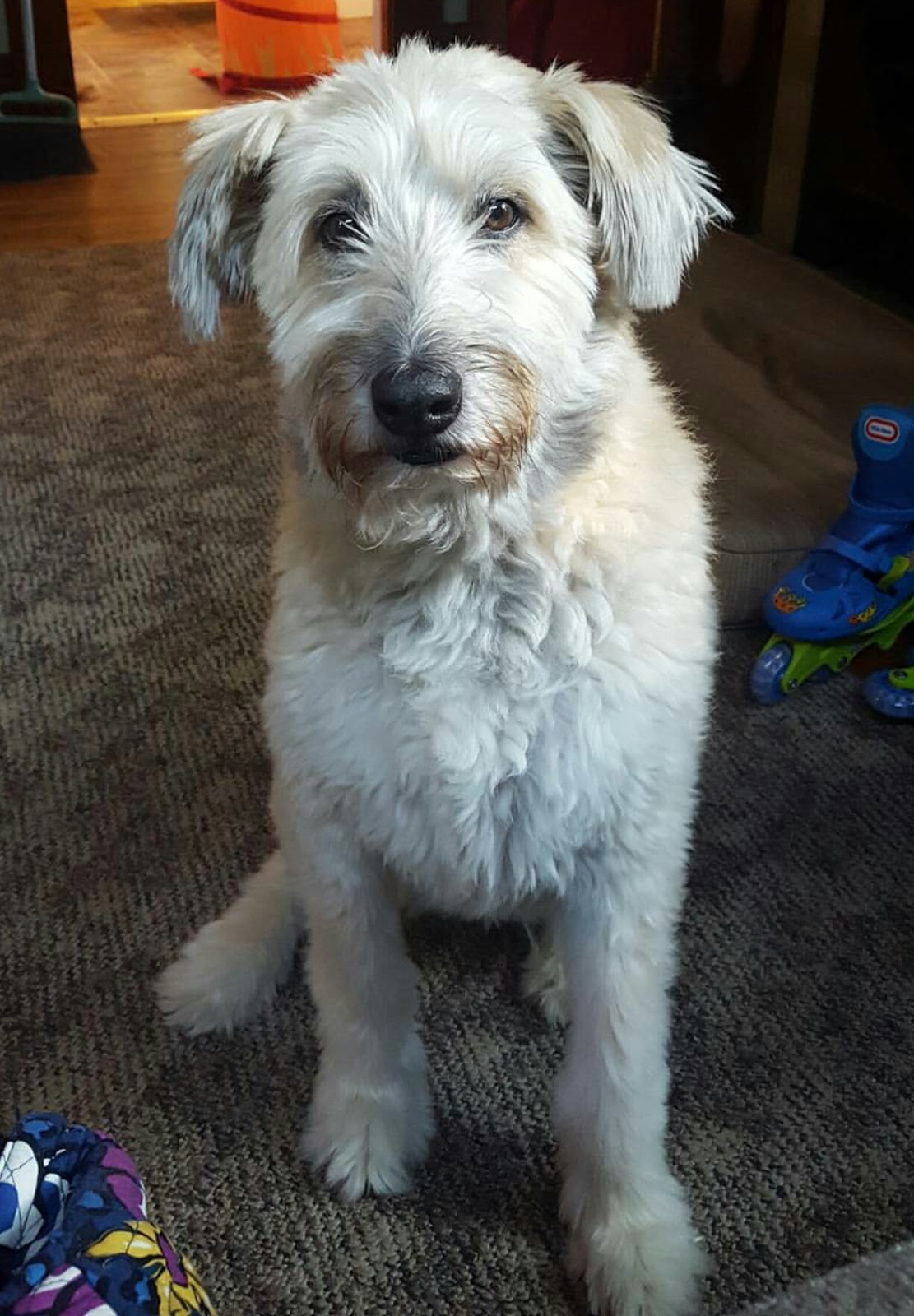
Honestly, I don't think I'm a true cat person. I like cats. I enjoy cats. But my beating heart is 100% dog. While the rest of you are watching cat gifs, I'm watching dog gifs. I think perhaps it's because my OCD brain--which tries so hard to figure each and every one of you out, and analyze why you just said to me what you did, for better or worse--needs a dog, an animal who, though not simple by any means, is not complicated in a moody teenager way. I understand dog. I speak dog. For years I've read about dog behavior. On a most fundamental level, dogs truly want to belong to us. Dogs are no longer wolves. Their society is our society; we came together 40,000 years ago. And though it was a mutually beneficial relationship that eventually spawned the collie mix snoring on the pillow beside me as I write this, let us not ever believe that the dog is a foolish creature because she is not a cat.

The domestic doodle
The dog showed up in wolf-form at an ancient human encampment, or more likely on the edge of it, to scavenge the scraps. In so doing, they deterred other predators from approaching. Gradually, both canid and hominid recognized the potential benefits of this relationship, and as braver and tamer wolves got closer to humans, the two species forged quite possibly the oldest interspecies relationship built on trust and love. It's foolish to say that humans domesticated dogs; I think it's far more likely that dogs saw humans as a very workable project. They're a most opportunistic species--just look at the way Maya can't stop herself from snatching a hot dog off the counter, the way Nugget cleaned out a bag of butterscotch chips the other day. If a dog sees a benefit, she's not about to wait around, and no matter how much she wants to please, her dogginess tells her that she needs that wiener, just in case there won't be another meal coming. Eat while you can, and trust that your soft ears and wagging tail will earn you the forgiveness of your person.

The dog fits well into our lives because she chooses to, because humans and dogs grew up together over the last forty thousand or so years. And thus, I think humans are good at speaking dog. I understand dog. I know why a dog does what she does. They fundamentally make sense to me, and the dog wants to make sense to her human. (Because if she makes sense, the human is happy, and a happy human offers food and love. And food.)

Cat, on the other hand, doesn't give a shit. 

This is where cat loses me. Why, cat? Why don't you give a shit?

Cats are opportunistic too. It's just that ancient cats didn't see us as a necessary part of the equation. William S. Burroughs wrote that "the cat does not offer services. The cat offers itself." How true. And while dog genetics are distinguishable from wolf genetics, cat and wildcat genes don't offer the same level of distinction. They're blurrier, indicating that the cat is only kinda, sorta domesticated. Any cat owner will confirm this. I have a cat-loving friend who refers to herself as her cats' staff.

Cats don't need us, really. They've been content to drift in and out of human lives, to cross paths with us when coincidence so dictates, making appearances on pyramid walls and in oil paintings from eras bygone. The dog in those paintings sits at the side of the monarch, his head in a lap, leaning, as they do, on a human leg. The cat in those paintings is off to the side, and probably disappeared long before the artist even finished opening his paints.

I have cats. I had two, until recently: Putter (Put-her, as in putter tat) and Gimli (Son of Gloin). I like the cats. They're soft and meowy. Gimli is neurotic; Putter is more of a cuddle bug. She has moments of catly joy. But Putter also likes to pee on Ben's rug when she gets angry. She likes to play and play and play and then bite. She gets offended when I sneeze and stalks out of the room with her butt parts exposed in my direction. 

She's a cat. 

Now, enter Panther, who is a different sort of beast than my family is used to. The other two cats live strictly indoors, but Panther came to us as a homeless chap who had been living outdoors. He uses the bathroom outdoors. Like all indoor/outdoor cats, he must roam. He simply must. His urge to come inside is driven not by his desire to find love and physical contact with his humans (who have grown to love him) but to find his bowl filled upon demand. Let us not kid ourselves by thinking that Panther would have stayed with my family if we weren't providing piles of food. 

And I do mean piles: he's 18.5 pounds. 

I really do enjoy Putter and Gimli, but not on the same level that I love my dogs. Hence, the "dog person" label I've always worn. If the kids are the heart and soul of our family, the dogs are the lungs. We need them to help us take a moment to breathe. They're right there in our midst, rolling on the floor with and snuggled up to our precious children. And now, suddenly, so is Panther. Unlike Putter and Gimli, Panther has inserted himself directly into the middle of the family unit. He's here with the dogs. He doesn't see any reason why he shouldn't be involved in our activities, in our living room moments. And like the employee who makes himself invaluable to the company by refusing to leave the office, Panther has so become a member of the inner sanctum in fewer than two months.

No matter his motives, that's very dog-like, in a way.

But Panther isn't a dog. Though he's made it onto the living room couch, he still succumbs to his need to do cat things. The problem with Panther is that he's a killer. In the last week I've pried a (sort of) live Goldfinch from his mouth and discovered a quivering, chewed chipmunk under the television stand. I hate this part of cats. I've always fed wild birds and squirrels. The activity at the feeders gets me through the long winters. Now, I hesitate to fill them up, as it might be akin to a flashing arrow that reads: Buffet Line Begins Here. Our yard, a hidden acre in the middle of Wheeling sheltered by silver maples, poplar, pine, and oaks, provides sanctuary for a huge range of wildlife, most of which is edible. As I mentioned in an earlier post, statistics indicate that domestic housecats kill between 3.7 and 6 billion wild birds each year. Billions.  

Frantic chipmunk in the bathroom
I don't like those numbers. At times I think that Panther's presence in our lives has ruined the chance for a healthy wild bird population out there. At times, I wish he'd bypassed our house altogether. 

He didn't come home yesterday morning. Nightly, he vanishes into the yard when Shawn goes to bed, and I welcome him home in the morning with a bowl of meat. So when I blindly opened the door in the foggy dark and no warm form came barreling past my legs, announcing himself with a loud squawk, I was surprised. The sky lightened, and I drank my coffee and waited for him. As the kids ate breakfast I kept a vigil at the door (as much as I hate to admit that it was a vigil, I would be lying if I said otherwise). When the sun rose high, I walked the neighborhood, looking for a carcass on the streets around the house, but I found no trace of Panther. 

Since his arrival in our lives, I've warned the children that cats who go outdoors rarely live as long as indoor cats. They must run the nightly gauntlet of cars, coyotes, and other cats. Things happen. Some never come home, leaving their families always uncertain of their fate. But Panther is New Hampshire Cat: he chooses to Live Free or Die. And knowing this gave me a tiny but palpable slice of consolation as I waited for him to appear in the kitchen. At 2pm he finally limped in, crying. His breakaway collar was gone and x-rays revealed no visible fractures but did show a twisted ulna. He purred while they worked on him, while the techs shaved his paw and wrapped him in a splint. I saw a burly, furry-faced vet tech carrying him like a baby. (Cats purr when they are happy and content, but they also purr when they're injured. This article in Animal Wellness talks about the idea that the vibration of the purr may actually induce healing in the cat body. "Interestingly, research has shown that exposure to frequencies at that same 20 to 50 Hz [as a cat's purr] induces increased bone density, relieves pain and heals tendons and muscles."

Miserable cat still manages to find his appetite
There's nothing more pathetic than a cat in a cast. He hobbles around the house, desperate to get outdoors, back to his catly routine, but his pain levels keep him subdued. The evening after the injury, his breathing was sharp and ragged. He panted and drooled until his pain meds kicked in, and yet, every time I moved him, he purred as he endured the process. Thankfully, he's accepted the litterbox as a substitute for the neighbor's garden. 

The real problem with Panther is that I've developed feelings for him, stronger feelings than I expected. He gives me no indication that I am particularly high on his priority list. My number one job is to be at the back door no later than 6am with a can of Fancy Feast dished out and waiting. (The price for tardiness is steep: he trips me as I try to prepare his meal.) And yet, he appeals to me in a way that no other cat has before. He's huge, and he's butch, with his testosterone-fueled stud jowls. In every way he's disrupted our lives. But he's got a quality that my other cats lack, and I wonder if it's a product of his former life as an orphan. There's something about Panther that's genuine, a quality I don't see in a lot of cats. It's not that they're necessarily disingenuous because cats don't pretend to be anything they aren't. Panther, however, seems to possess a quiet gratitude for his recent adoption into our lives. Sometimes he looks at me, his eyes constantly runny and watering from what the vet thinks are allergies, and I see acknowledgment. And when I bend to kiss his forehead--something I have never done with Putter and Gimli because I've never been much of a cat-kisser--he bows his head down and parts his ears and offers up a robust purr. I think it's a thank you.

Blissful domestication
and uneasy tolerance
Panther and I both feel uncomfortable with labels. I'm not willing to commit to a cat-person label, and he's not sure he wants to wear the mantle of semi-domestication. As I type, his pupils are huge because he's watching falling leaves and mistaking them for fluttering songbirds. Though he's comfortable here on the couch, it's only a matter of time before he's back out there looking for his inner wildcat.


Wednesday, June 1, 2016

Cicadas: Day 11

Hi Cicadas,

Well, here we are. You guys and me.

I know I was reluctant to welcome you all, the most magnificent Brood V, to the panhandle of West Virginia. I know I said hasty things I'd regret later. But I went out of my way, on Day 5 of your miraculous emergence, to correct my faulty thinking. I apologized to you for my vitriol. And I tried to make you feel at home and marvel at your evolutionary genius. We've settled into a routine now, right?

It's just that...how do I put this?

The thing of it is, well, that was, like, Day 5. And you guys were crawling out of the ground in moderate numbers and unfurling your beautiful wings and resting in the shade, and my kids were playing with you and you were crawling on their shoulders and hanging off their ears. It was a jolly swell time, wasn't it? And, you know, I'd just seen that amazing Kickstarter cicada video with the violins.

Violins, cicadas. I get swept up by violins. And then they threw in some sunset shots and some text that kind of faded into the background as the camera panned away from your little carcasses. I think I got lost in the romance of it, you know?

I went to Jamaica once. I'd just had a long, sad breakup and I was feeling really unattractive and miserable and lonely. And I got a little carried away by the romance of the island. Maybe I made some poor choices. It's easy to do when you're emotionally affected. But then, ultimately, reality sets in and you realize you've had fourteen Purple Rains and a roll of film is missing and it's the dawn of the internet and girls are going wild and things aren't quite as beautiful as you thought they were.

And I'm not likening you guys to regrettable Caribbean hot tub misadventures. Certainly not. It's just that...not everything ends up quite the way we think it's going to. Sometimes life is violins and sunsets, and sometimes life is a dog vomiting cicadas carcasses up onto the bedroom carpet.

Remember that time you just sort of sat on my lounge chair and stared at me and didn't move and I was able to admire you in your stillness? That was nice. I was thinking about it the other day when one of you bumbled into my eye socket. Like, right into my cornea. And it's not that I don't welcome your morning input, but I also found one of you in my coffee cup. Why, cicadas?

Feel free to ride the dog--seriously--but could you hop off before the dog comes into the house? And could you, like, leave your exoskeletons maybe out in the yard instead of on my dental floss? Just a thought.

Quite frankly, you guys are kind of loud. And there are about 10 million more of you than I was expecting.

I mean, did you ever throw a party or maybe plan a wedding, and you have a set number of guests and the right amount of seats and food for those guests, and then on the day of the party Uncle Hank shows up with his new girlfriend and her four kids and they just kind of shrug and say, "Gee, hope you don't mind our crashing your party--har har," and then you realize you're going to have to give up your own dinner because there's not enough food for them so you just end up eating cold cocktail weenies off a toothpick while her kids gnaw on the steak you set aside for yourself and resenting the shit out of Uncle Hank who obviously doesn't realize that she's just using him for his time share in Myrtle Beach? God, what an oblivious idiot.

I'm not calling you party crashers. It's just that there's a lot of you. And normally in June, I'd be on my deck with a cocktail and a novel, or planting some caladiums, but at the moment you guys are so loud that I just feel like listening to the hum of my air conditioner instead. They say your decibel levels rival those of a rock concert. Heh. Wow. That's something, eh?

I know this is your life cycle, and I was all, "Yay cicadas!" a few days ago. Really, I thought you were well on your way to doing your bug-romance thing. But I've noticed that some of you are still crawling out of the ground. Getting a late start on your emergence. In some circles, Cicadas, we'd call that rude. Lateness is generally frowned upon.

Sometimes I wish for a good old fashioned stink bug sighting again. And that's not your fault. I'm sure it's my own baggage I'm dealing with. Still, if you could work with me a bit, I'd appreciate it.

Also, I don't know how to say this delicately, but some of you are starting to stink.

Cicadas: Day 5


NOTE: I wrote this blog on May 21.

I'm not really sure how one eats crow in a public forum when one has gone to such great lengths to denigrate and castigate an entire species.

A few months ago, I composed a blog about my distaste for the impending arrival of Brood V of the periodical cicadas. I said I wished to will them out of existence, to wreak an entomological genocide and wipe their presence from the face of the West Virginia hills. Or something like that. I was all up in arms about the Biblical swarm to come and dropped several unladylike f-bombs as I railed against the cicadas.

And now, with tail tucked firmly between legs, I offer up a sincere apology. Cicadas, please, hop onto my knotted rope so that I may flagellate myself a little harder. I deserve it. Because I think you're so damn neat.

As their emergence neared, I grew ever more nervous. Ben and I watched the nymphs closely as they meandered in their tunnels under the pavers. The weather warmed; the weather cooled. Just when I thought they might appear, they didn't. It's like when you're in the dentist's chair waiting for a root canal and you hear the dentist approach and then retreat and you sort of want him to get his ass in there and get it over with and you sort of want him to fall down a mine shaft.

Anyway, I was anxious. The nymphs grew larger, and they built cicada chimneys from which they would eventually emerge. They did this a month ahead of time, proving that periodical cicadas are nothing if not neurotic over-planners.

I think that's when I started to crack. Boom: there was my commonality. We're both Type A, obsessive creatures who pack our bags a month ahead of time and have an eye on our escape root the moment we enter a building.

When I caught the boys stomping nymphs and crushing them with bricks, I was appalled. I told them that the little buggars had waited 17 years for this chance and that I wouldn't stand for cicada cruelty, pain receptors or not. (They're arthropods, after all, and so are lobsters, and don't you tell me that lobster isn't screaming to get out of that pot when you boil him up.) Suddenly, it seemed so unfair to have to work for 17 years for a chance at life only to meet your grisly end under the weight of a tiny Star Wars Croc. (All the more undignified a death should it prove to be a shoe that lights up.)

And then I saw that cicada video I put in the previous blog. It's a genius piece of artwork, with the violins and all. Somehow an insect swarm, when put to piano and moody lighting, loses the ick-factor and becomes a moving and powerful example of the miracles in nature, of evolution. When they got to the individuals with the deformed wings, I was teary. When they all died, I was inconsolable. In fact, I dare anyone to watch that video and not be moved.

Cicadas, I love you guys.

Friday, April 22, 2016

17-Year Horrors

We're about to undergo an event here in West Virginia. It's a miracle of nature that happens only once per generation, a much-studied, much-anticipated entymological occurrence that makes the news and water-cooler conversations: the arrival of the periodical cicadas, a.k.a. the 17-year-locusts.

They aren't locusts, technically. We refer to them as such out of habit around here. But these are cicadas, the same insects that arrive in August to drone on for a month. The regular summer bugs are what's known as the "dog day cicadas"; what's about to arise from the ground after 17 years of underground dwelling are the periodical cicadas. They come in 17- and 13-year versions and they spend their lives under the earth, chewing on tree roots and undergoing various metamorphoses, from what I've read. Then, when the 17th spring has arrived and the soil reaches 64 degrees, they all emerge in one giant horde, a display of the awesome power of nature and the wonder of evolution.

And it's fucking disgusting.

I dread this emergence with every fiber of my being. In fact, I dread it so much that I've actually begun to concentrate my dread within my third eye in the hopes that if I resist their arrival with enough vehemence I may actually will it not to happen. And in so doing I will spare West Virginians the agony of Brood V's wretched swarming.

It's hard to consider myself a nature writer and admit that I despise the cicadas. I feel as though I really do my part to educate my kids when it comes to the creepy-crawlies. Every year Ben enjoys the arrival of the tent caterpillars (he calls them bagworms). We break open their nests and hundreds of squirming bodies plop out onto the ground. And I let them crawl on my arms so he can see that nature is not to be feared or choked down with a shiver and a gag. (This lesson wouldn't apply if we lived in rattlesnake country, would it?) We also spend lots of time fondling earthworms and kissing crappie when we catch them. We dig up Florida Fighting Conch down at the condo in Fort Myers Beach, and poke at their slimy, tongue-like feet.

I don't think that nature is gross at all. It's miraculous. It's nifty.

But not these fucking cicadas.

I was three when they first appeared, and I have no memory at all of the experience. My parents say it was eerie: as Dad walked his dog in the evening he became aware, suddenly, that they were all coming out of the ground, and millions of red eyes watched him. They rose like the dead in unbelievable numbers, discarding their shells as they did so at the base of every tree in piles ten inches thick. Mom recalls how they screamed all day, so loud that conversations were drowned out, and she specifically remembers the cicadas clinging to her shirt and sitting on her shoulder, singing their love songs in her ear.

I do not want this to happen. I do not want a song crooned in my ear. Especially not a cicada booty call.

They returned again in 1999, and as luck would have it, I did not return home from college that summer and missed the periodical cicadas entirely. The stories from that year are bland and uneventful; for whatever reason the bugs were not as intense as they had been 17 years prior. Nobody I've talked to can recall anything striking or significant.

In 2013, we saw what scientists call "stragglers." These are cicadas that, for whatever reason, emerge 4 years too early or 4 years too late. There were a handful in the yard, just enough for the boys to gather and organize a cicada circus. I recall the red eyes. Dog day cicadas lack the red eyes and for that I am thankful. Demon bugs belong down in hell.

Yesterday we had some leaf-rakers tend to our yard. Over the long, cold months, the leaves tend to get caught in the gardeny places, between boxwoods and lilacs and under the hemlocks. When the guys raked clean the bare soil, I saw that it was pock-marked with holes, a tell-tale sign that cicadas are here. And when Benjamin lifted a rock, there they were.


They're not yet ready to officially emerge. Still in their nymphal stage, they're just below the surface, tunneling around like ants in an ant farm. Each rock and flagstone and flower pot we lifted had cicadas under it, burrowing. Ben poked at every single one of them, trying to decide whether they were fascinating or repellant. I tried my best to imply that they are fascinating. I even picked up a nymph and let it crawl upon my hand.

But I hate them. They're going to cling to me. And rrrrrraaaaaiiiiirrrr in my ear.

Surely this is an evolutionary reaction. Somewhere in my genetic memory lies the recollection of an Egyptian plague, and the subsequent biblical trauma that ensued. It was a rough time. First, we were enslaved for 400 years. Then a plague of locusts started a big-ass coup, and everybody ended up wandering the desert for forty years. There were sunburns and lechery and a golden cow, and it really sucked.

I think I'm on to something, here.

Anyway, the El NiƱo has brought a warm spring and an early spring. And the bugs are awake and raring to go. Every day I wake up and wonder if they'll be out, and I stare out at my baby redbud tree knowing I have to cover its new growth to protect it from the egg-laying females who will deposit their icky little spawn in the branches and damage them.

And so, I wait.

Friday, April 24, 2015

Big Bushy Backyard

This past semester, I might have chosen my own backyard just as easily as I chose Piedmont. In fact, if I had, I'd have encountered far more wildlife, albeit familiar wildlife.

Heinrich, the fornicater extraordinaire.
The yard is actually three yards together, and the property belongs to my father and my uncle. The three houses on the property do, too. In fact, the three lots were purchased at the turn of the 20th century by my great-great grandfather and his two children. Each built a house on the land and the entire family lived here for the remainder of their lives. The patriarch would die relatively shortly after building his house, but his son and daughter would live their lives in their respective houses next door and my grandfather and great-aunts were all born here. I've written extensively about this family story here, in Weelunk. It's unusual and amazing and will take up 20 minutes of your already-busy day.

Anyway, my parents now live here and I live next door to them, and for forty-plus years my father has been planting trees on the property. It's about two acres. We grumble about this, as it causes the houses to accrue mold and the gutters to clog. The amount of work my poor husband has to do for autumn leaf-cleanup is beyond measure. There are easily one-hundred trees here. Some of them are Christmas trees my parents planted after using them in the early 70's. Many are volunteers. We have silver maple and oak (pin and red) and poplar, sycamore (horrible trees) and magnolia and hemlock, honey locust and ash and on and on and on. Dad has this thing about Nature. (I have to capitalize that.) Things must be allowed to flourish, to their own ruin, even. Weeds are unwelcome if they're growing in the driveway, but any little sapling that shows up, even if it's growing right in the middle of the area where we play kickball, is encouraged and loved. Flora are rarely trimmed, here. Except by me.

Mama woodchuck and one of the twins
In fact, Shawn and I have a running joke about our insanely unkempt forsythia. For propriety's sake I won't repeat it here but we refer to it as the crazy 70's bush. We can trim the sides, but it's so massive that we can't reach the top, and so it gets taller and wackier every year, and doesn't bloom as heartily as it used to for that reason. It needs a good trim. But, as nature tends to do, it tucks us into our yard in increasing privacy, and we like this. More importantly, the crazy 70's bush is a dense thicket of habitat for birds and rabbits. Many birds spend blustery days hiding there, although the most common resident of the unkempt bush is the sparrow, and if you don't know how I feel about sparrows, you soon will. Mama rabbit (all seventeen of them) stay in the bush during the day. And under the little shed next to the bush we sometimes have a groundhog. One year she produced twins, and so we were thrice-blessed in the whistle-pig department.

One can never have too many whistle-pigs.

Oh, yes they can. And we did. Daddy groundhog lived under the front porch and he was, as they say, arnery. They've dispersed in the past few years; on occasion we will see one under the shed.

Sycamore out front, two honey locust in back cover the
entire house.
The canopy above the houses is thick, so thick in fact that Google Earth does not show my house, and only a bit of the houses on either side. Now imagine your life as a squirrel on this property. Glorious! My red squirrels find themselves the luckiest little twitchy bastards in the east. Their feet don't have to touch the ground. Additionally, this canopy provides cover for the fox squirrels too. Fox squirrels are terrestrial squirrels; they make leaf nests and reproduce up in the trees, but they spend a good deal of time foraging on the ground, and under this thick layer of green they are protected from flying predators, including our resident sharp-shinned hawk (although I think he may not be big enough to tackle a fox squirrel).

The photo displays the vast wilderness-in-the-city that my father has created. The deer sleep in the yard year-round, and on the north side of the property a little run (creek) flows towards the west, so critters have a water source. And as a bonus, children can find both water for their sandbox and a perfect opportunity to contract poison ivy. As a child I got it so many times that my parents banned me from the creek, not that I would be banned. In fact, I was in there just the other day collecting rocks for my newest pond project. Much of the creek is technically on the neighbors' side of the property line. The neighbor is the fiercest attorney in the state, so I wait until everyone goes home at the end of the day before I start hauling out my sedimentary booty, just in case.

While are bird varieties aren't particularly sexy, on any given day we see:

Where have all the finches gone?
To my house.
Black-capped Chickadee
Tufted Titmouse
Robin
Wren
Goldfinch
House finch
Junco
Starling
Grackle
Hummingbird
Nuthatch (my favorite)
Cardinal
Blue Jay
Downy Woodpecker (we have a mated pair)
Red Bellied Woodpecker


We recently acquired a group of the bawdiest crows in the world. They nest in the box gutters next door, and they sit in the trees above the yard and throw down their raucous laughter and what I can only assume are dirty jokes based on the way they all cackle. They've changed the dynamic of the yard significantly.

The sharp-shinned hawk is never far. It's presence is always announced by the other birds, and it calls frequently. Once in a while a red-tailed hawk will show up, and two summers ago one of the Ohio River Bald Eagles flew over the house.

Every September our little screech owl makes his/her presence known. I know the owl is always around, but of course we've never seen it. It sits in the honey locust every fall and cries its heart out in a beautiful and disturbing series of lonely cries. This Easter we lured to dinner a friend who works for the power company. We gave him food in exchange for his services in climbing a poplar and hanging a screech owl house about 25 feet in the air. The house faces east, away from northerly blasts, and it's near a little branch so any chicks born might have a place to hop around. I've read it can take anywhere from a few weeks to several years for the owls to discover the house, and within two days I had bleeping starlings checking it out. Nobody seems to have moved in yet, thankfully. I look every day, hoping for a little owl face to peer out at me.

It's a little biome all its own, here. We gripe incessantly about the yardwork (my parents are old enough that Shawn and I have taken over the maintenance of the three yards), and the trees. It's impossible to imagine the variety of wildlife, though, without the arboreal habitat that sustains them. I'd write more but I have to go get the honey locust seeds out of the fish ponds.


Stop having babies in my herb garden!


Swaggering chuck

Buns and chucks and chucks and buns